SMS marketing for restaurants in Australia: what works and the rules
A well-timed text brings regulars back on a quiet Tuesday; a badly timed one gets you blocked. Here’s how restaurants use SMS and email marketing, the automations that run on their own, and the Australian rules you have to follow.
In short: SMS works best for short, timely offers to guests who already know you; email suits longer, branded content. Target by behaviour (lapsed guests, regulars, favourite dish), automate birthdays and win-backs, and follow the Spam Act: get consent, identify your business and include a working unsubscribe.
The Australian rules: consent, identify, unsubscribe
Under the Spam Act, commercial texts and emails need three things (ACMA):
Only send to people who have agreed to receive your messages.
Accurately name your business and include correct contact details.
A clear, free way to opt out, honoured within 5 working days. For SMS, “Reply STOP” is a common example.
This is general information, not legal advice. Check the ACMA guidance for your situation.
Campaigns that work for restaurants
- Quiet-night offers: a midweek deal to regulars who haven’t ordered this week
- Win-backs: a “we miss you” offer to guests who haven’t ordered in a while
- Events and festivals: Christmas bookings, Mother’s Day, Lunar New Year, Diwali, footy finals
- New menu items: sent to guests who order that cuisine or category
- Bookings: “tables still free tonight” to nearby regulars
Automations that run themselves
| Trigger | Example message |
|---|---|
| Birthday | A treat on their special day |
| First order | A reason to come back for a second visit |
| Lapsed guest | A “we miss you” offer after a set number of weeks |
| Abandoned cart | A nudge to finish the order they started |
| Order milestone | A thank-you on their 5th or 10th order |
| Anniversary | Mark the date they first ordered |
SMS or email?
Use SMS for short, time-sensitive offers: it’s read quickly but costs per message and has little room. Use email for menus, events and branded promotions with photos. Many venues send a short SMS for the offer and an email for the full story.
Tips for better results
- Keep texts short, with one offer and one link
- Personalise with the guest’s name and favourite order
- Send at the moment people decide: late afternoon for dinner offers
- Use a unique code so you can measure what worked
- Don’t over-send: a few relevant messages beat daily blasts
How OrderArt helps
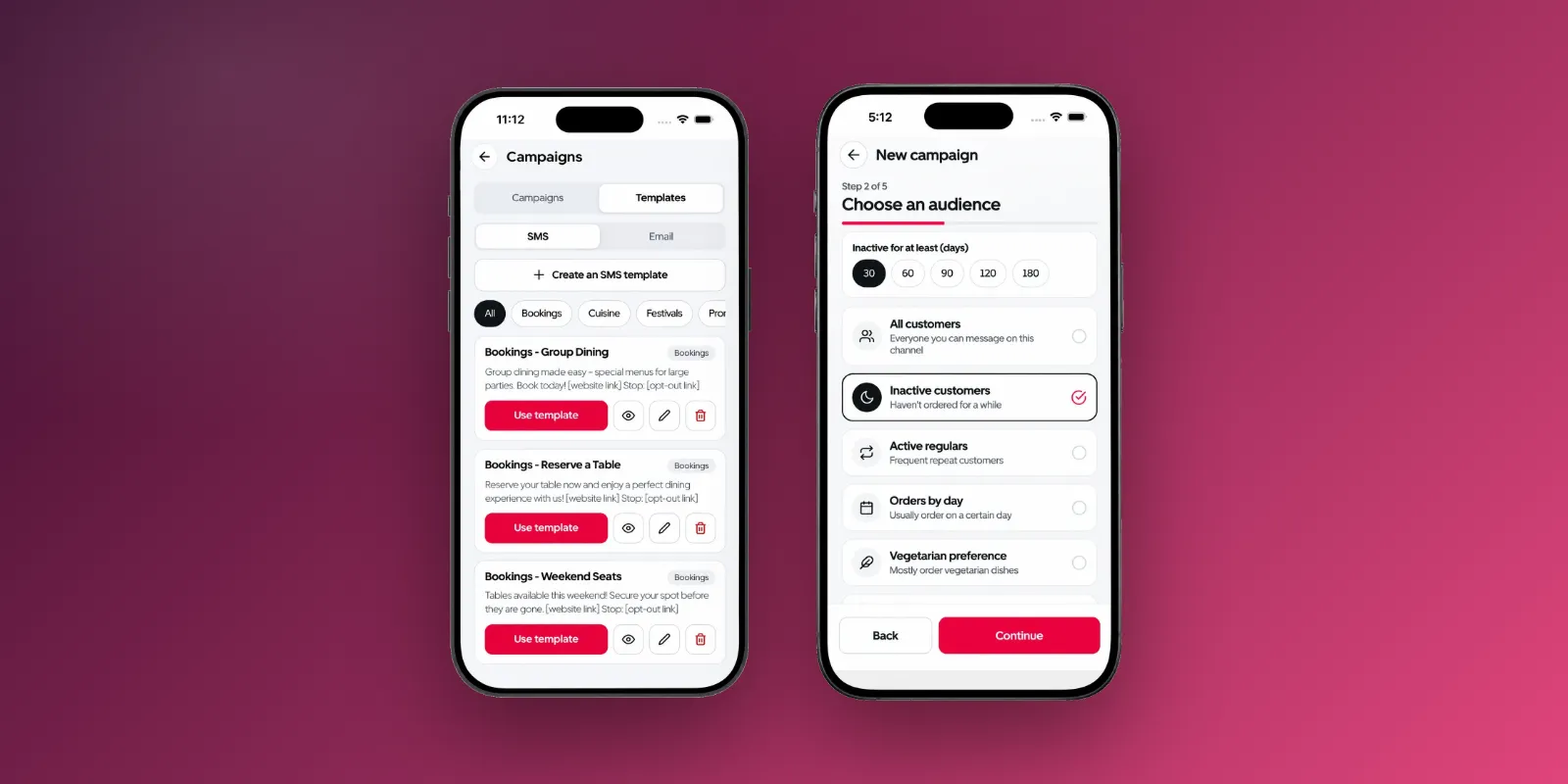
OrderArt’s Smart Marketing Hub builds SMS and email campaigns in five steps (channel, audience, message, preview, send) using the customers already in OrderArt. You can target lapsed guests, regulars, their usual order day or food preference; SMS templates include opt-out links; and AI writes and designs branded emails from a one-line description. Automations cover birthdays, first orders, “we miss you”, abandoned carts, order milestones and anniversaries, and you pay only for the SMS you send.
Frequently asked questions
Is SMS marketing legal in Australia?
Yes, if you follow the Spam Act: have consent, identify your business with contact details, and include a functional unsubscribe that you honour within 5 working days.
How often should a restaurant send SMS?
Only when you have something relevant: a few targeted messages a month usually work better than frequent blasts, which drive unsubscribes.
What’s a good SMS for a restaurant?
Short, personal and specific: “Hi Emma, it’s been a while! Enjoy 2-for-1 pizzas this Tuesday with code PIZZA2. Order: yourvenue.com.au. Reply STOP to opt out.”
Should I use SMS or email?
Use SMS for short, timely offers and email for richer, branded content. Many venues use both.